

Getting Ready for School: A Sleep Strategy
Sample received. All views expressed are my own.
As a parent with 23 years of experience and a background as a 3rd grade teacher, I’m well aware that adequate sleep is crucial for a child’s academic performance. Insufficient sleep can lead to difficulties in concentration, adapting to new environments, and managing emotional challenges. The nervous system simply cannot function at its best without enough rest.

From my own observations, I’ve seen that when my kids skimp on sleep, they become moody, lack energy, show irritability, exhibit tension, struggle with memory, and find it hard to focus—all of which are not conducive to effective learning.
For this reason, Sealy® conducted a survey with over 1,000 parents to uncover their sleep habits as the back-to-school season approached. The findings led the sleep specialists at UNC School of Medicine to create valuable tips for establishing a sleep routine suitable for the school year.
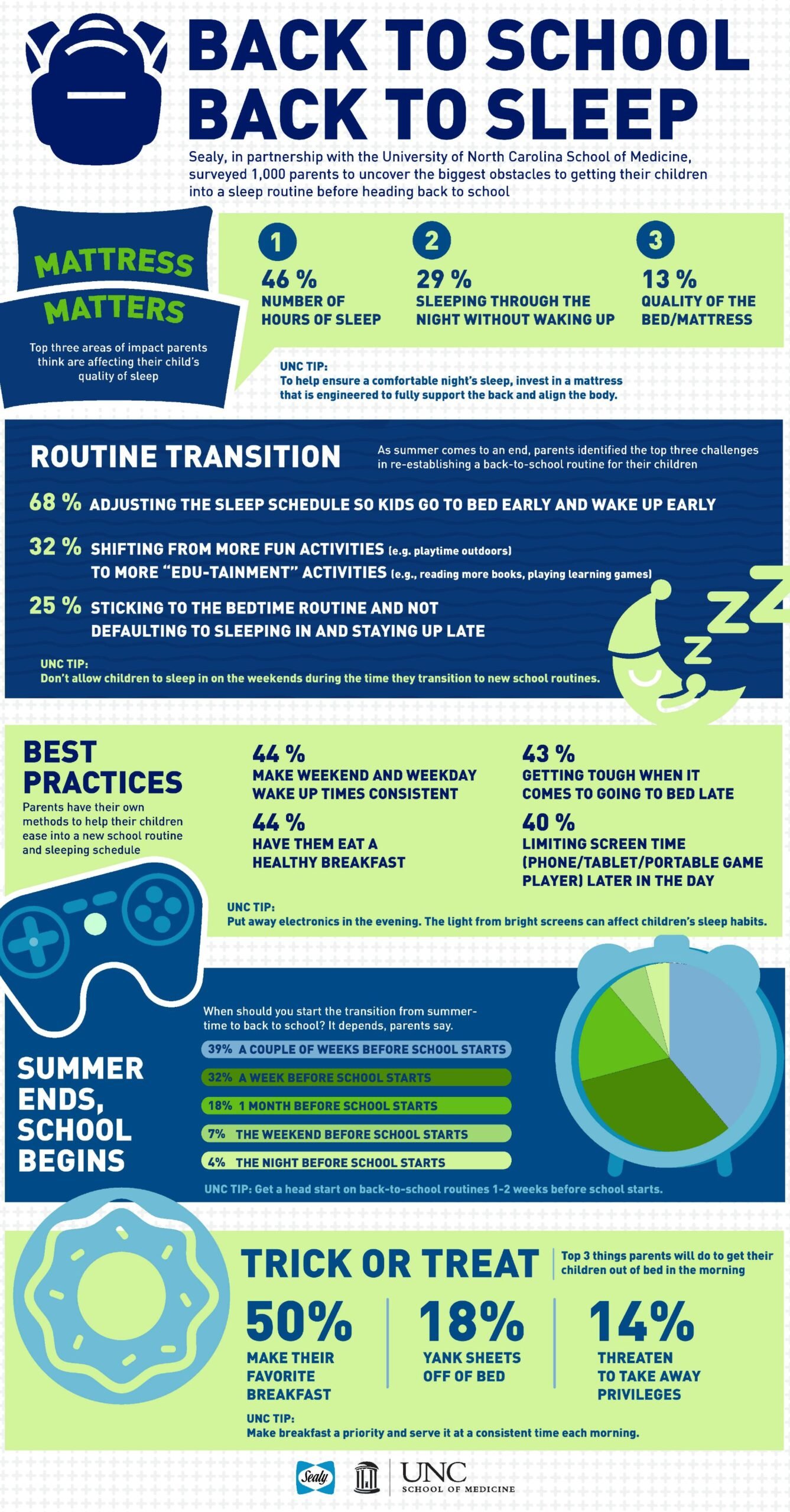
Back to School Back to Sleep. 7 tips for transitioning your child back to a school routine.
Though my children wished the school year would delay a bit longer, we faced the first day of school last week. We adopted several of the strategies highlighted by the UNC School of Medicine’s Sleep Science Program. The following seven tips have significantly aided our family in moving from the final phase of summer relaxation to a productive, synchronized sleep routine.
7 Tips for Returning to School and Returning to Sleep
* Adjust Bedtime – Begin shifting bedtime and wake-up times a week or two before school starts, gradually advancing these times by no more than 30 minutes each day.
* Say Goodbye to Late Nights – Avoid late bedtimes. Different age groups have varying sleep requirements; the National Sleep Foundation recommends 10-11 hours for children (5-10 years) and 8.5-9.5 hours for teenagers (11-17 years).
* Ditch Late-Night Screens – As a general guideline, turn off electronic devices two to three hours before bedtime. Sleep specialist Tony Spencer from Spruce notes that any device that emits blue light or stimulates brain activity can interfere with the body’s natural sleep transition.
* Invest in a Good Mattress – Ensure a restful night’s sleep by choosing a mattress designed to provide proper back support and body alignment.
* Avoid the Snooze Button – Encourage a consistent wake time for your child on school days and weekends to avoid sleep-in habits.
* Prioritize Breakfast – Make breakfast a key part of the morning routine at the same time each day. A nutritious breakfast not only energizes children but also enhances their learning capabilities.
* Utilize Natural Cues – External factors help regulate our sleep/wake cycles. The sun is the most powerful natural cue; encourage your child to get some morning sunlight shortly after waking up.
Sealy emphasizes the importance of finding a bed that provides excellent back support for individuals of all ages, ensuring comfort and quality sleep each night. Do you have any recommendations to help your family navigate the transition back to school and sleep schedules?

Leave Your Comment Cancel reply