

The experience of hair loss can subtly redefine how individuals navigate social situations and daily life. It often starts gradually, leading many to unconsciously modify their routines and choices. This might manifest in the selection of particular hairstyles, evading harsh lighting, or stepping back from group photos. For numerous individuals, the emotional toll precedes their awareness of the change.
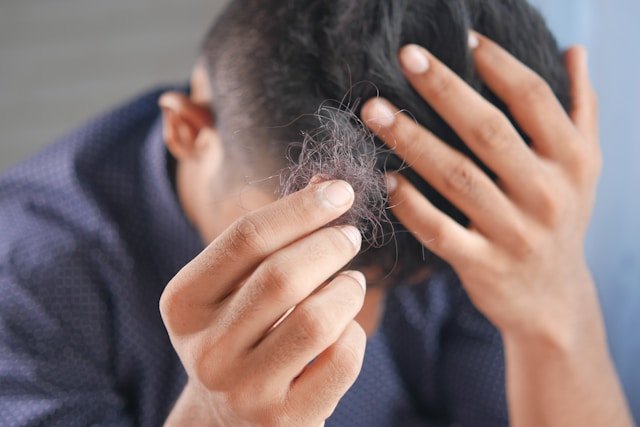
As reported by the American Academy of Dermatology, around 80 million individuals in the U.S. face hereditary hair loss. Yet, many opt to silently manage this issue for years rather than seeking lasting solutions.
In regions such as Henderson, NV, discussions regarding hair restoration have become increasingly candid, coinciding with advancements in medical treatments. Nonetheless, many are left pondering when they should transition from concealing the issue to exploring a more lasting remedy.
Here are five indicators that it may be time to consider a more permanent solution.
1. Your Hair Loss Is No Longer Temporary
Factors such as stress, dietary shifts, and hormonal changes may lead to temporary hair shedding. In some instances, regrowth is possible. However, persistent thinning over years typically indicates pattern baldness. Indicators include:
- A receding hairline, especially at the temples
- Progressive thinning at the crown
- An expanding part that grows wider over time
- Reduced density while styling or brushing
Many begin to explore options such as hair transplants in Henderson, NV as these signs of pattern baldness become evident. When thinning follows a distinct pattern, a transplant can effectively relocate healthy hair follicles from areas with robust growth to ones where density has diminished.
Clinics like Engineered Aesthetics typically offer either the FUT or FUE hair transplant methods, chosen based on the individual’s hair pattern, the strength of the donor hair, and the intended density. The objective is not only to add hair but to enhance density in a manner that aligns with the patient’s natural growth pattern.
For this reason, consultations generally focus on assessing the donor region, the direction of current hair, and the probable progression of future thinning.
2. You Devote Excessive Energy to Concealing It
Initially, many people try small remedies, such as different hairstyles, volumizing products, and specific styling techniques. These modifications are typical.
The real change arises when the need to manage hair loss begins to significantly alter daily behaviors. Individuals may start wearing hats more often, avoiding wind or water, and growing their hair longer just to hide thinning patches.
While these adjustments may not seem excessive, the moment they become a standard practice, many consider more permanent alternatives. Surgical hair restoration frequently comes into play at this juncture, as it targets the underlying issue rather than merely masking it.
3. Non-Surgical Methods Have Lost Their Effectiveness
The market for hair loss treatments is vast, with many solutions effective in the initial stages. Options include medications, topical applications, and scalp therapies aimed at reducing shedding. For some individuals, these treatments can help retain hair for an extended period.
However, they rarely restore significant loss of density.
As noted by the National Institutes of Health , hair transplantation is the sole technique that offers permanent restoration for those with advanced pattern baldness.
When individuals reach a point where maintenance treatments stop yielding visible results, surgery can be seen as a viable option rather than a last choice.
Many come to this realization after extensively trying various treatments that yield little improvement.
4. Hair Loss Impacts Your Self-Esteem
While personal experiences may vary, many individuals observe notable changes in their self-perception due to hair loss.
Some prevalent emotional signs include:
- Feeling older than your actual age
- Shying away from photos or video calls
- Feeling increasingly self-conscious in social gatherings
- Frequently preoccupied with thoughts of hair loss
Typically, a decline in self-confidence is a key reason individuals start looking into surgical restoration options. The goal isn’t perfection but rather the return of a sense of normality. Current hair transplant methods prioritize natural placement and gradual density, ensuring results integrate smoothly with existing hair.
5. You Are Seeking a Permanent Solution
Products like thickening sprays or styling fibers serve a purpose but require continuous maintenance. In contrast, a surgical transplant provides a lasting solution. Healthy hair follicles are transferred from areas with robust growth to those with decreased density. Once these follicles acclimate to their new site, they continue to grow as normal hair. This permanence is often what draws individuals to the procedure.
Patients reaching this point typically express a sense of weariness during consultations; they are exhausted from temporary solutions and wish for a stable remedy that seamlessly fits into their lives.
Conclusion
When hair thinning becomes a permanent fixture, begins to impact self-esteem, and shows little response to traditional treatments, exploring surgical restoration could be beneficial. This choice is highly personal, yet modern hair transplant methods have made the process more natural and accessible than many perceive.
For those who have spent years concealing their hair loss, simply recognizing the existence of a long-term solution may bring significant relief. Often, the most challenging step is acknowledging that a lasting remedy is available.

Add Your Comment Cancel reply